
Golf Clubs for Beginners: Club Types, What's in a Set and How to Choose
Time 21/10/2026
The question new players ask WinGolf most often before their first round is: “Do I need a full set of 14 golf clubs?” The short answer is no. Most beginners only use 6–8 clubs regularly in their first year, and spending a four-figure sum on a set before you know whether your swing is fast or slow is usually the purchase people regret most.
This guide covers what each type of club is for, which ones a beginner actually needs, how to pick shaft flex and length, whether to rent, buy used or buy new, and how to choose a golf bag without wasting money. The distances quoted here are what real beginners hit, not tour-pro numbers.
- The Rules of Golf allow a maximum of 14 clubs in a round. There is no minimum.
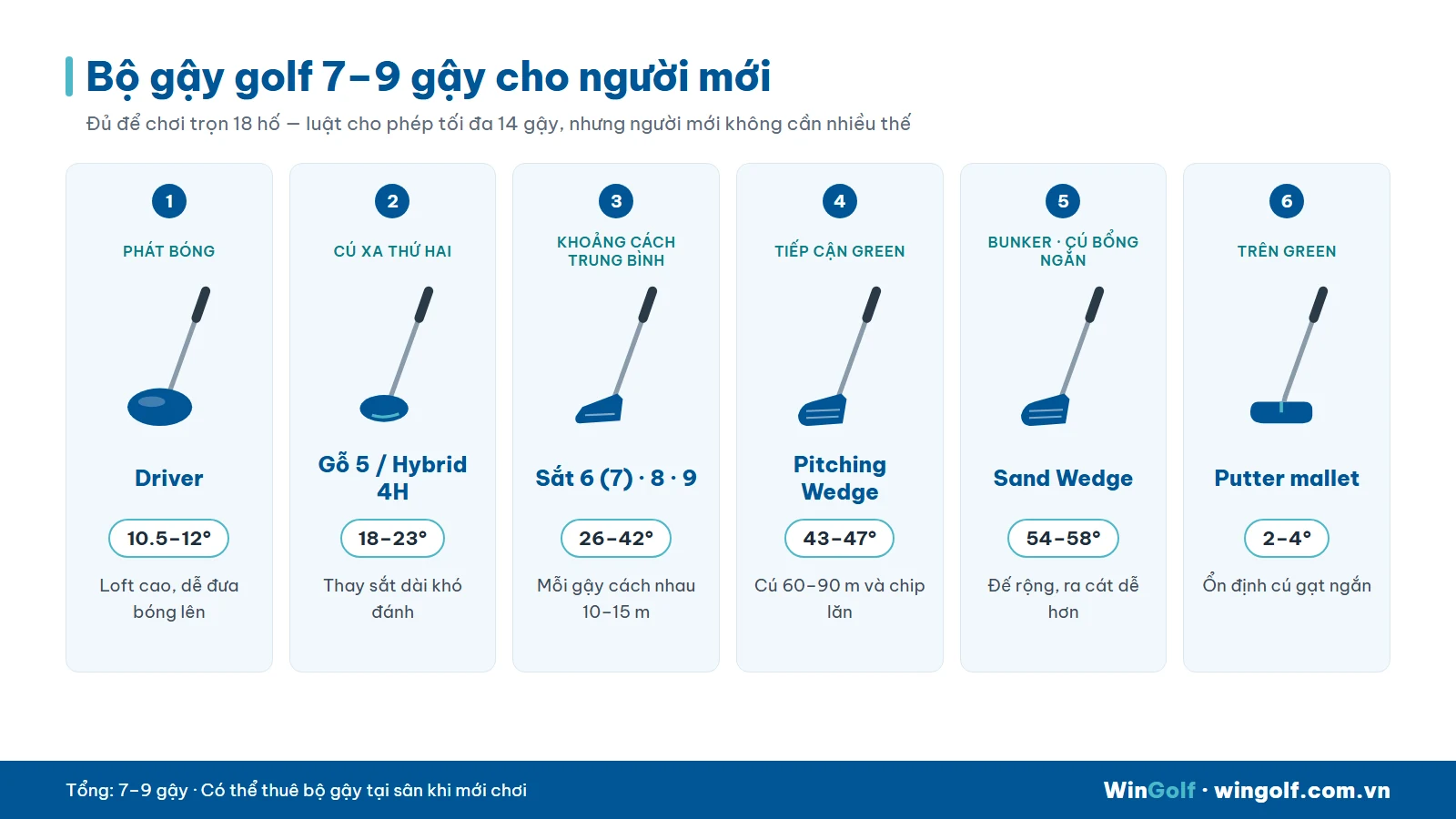
- A beginner only needs 7–9 clubs: a high-loft driver, one fairway wood or hybrid, 7–9 irons, PW, SW and a putter.
- For the first 1–3 months, rent or borrow clubs at the driving range to find out what suits you before you buy.
- Choose shaft flex by swing speed: most male beginners suit R flex, most women L flex.
- Rough budget in Vietnam: a used full set runs about $640–1,600, a new mid-range branded set about $800–1,200.
1. What's in a set of golf clubs?
Under Rule 4.1b of the R&A Rules of Golf, you may start a round with no more than 14 clubs. Carry extra and you pick up a two-stroke penalty for each hole where the breach occurred, capped at four strokes per round in stroke play. There's no minimum, so playing with seven clubs is perfectly legal.
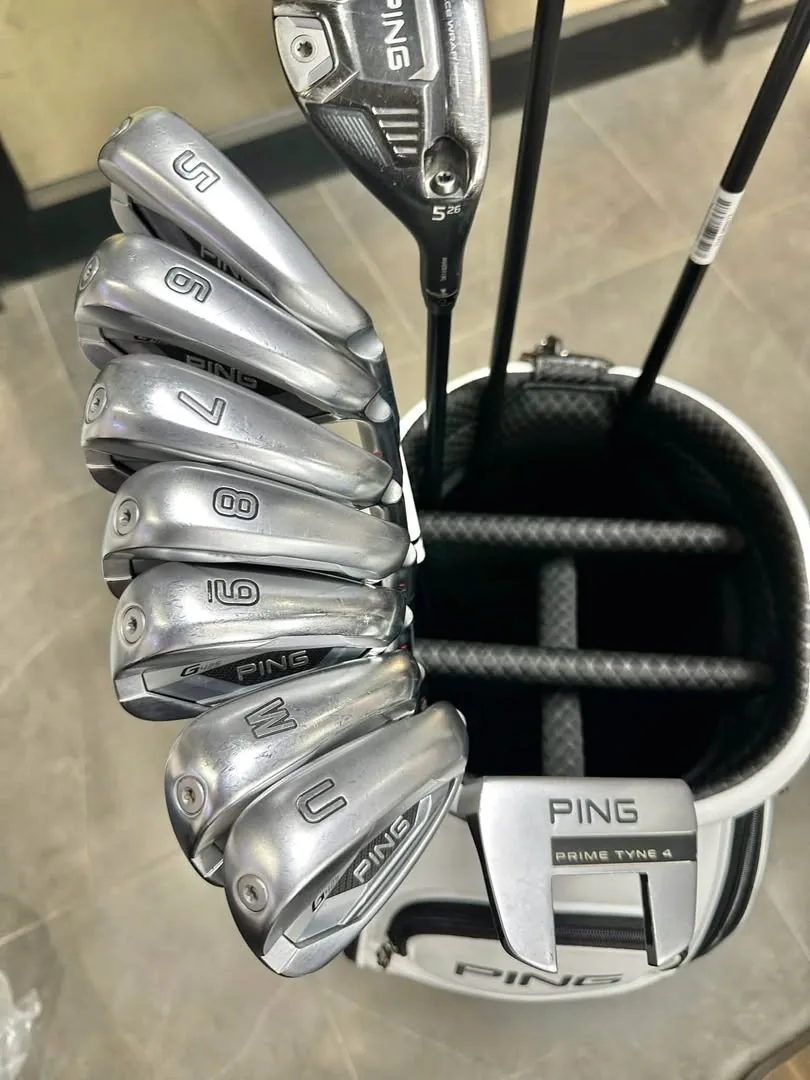
An off-the-shelf full set usually has 11–14 clubs, typically made up like this:
| Club type | Typical number | When you use it |
|---|---|---|
| Driver (1-wood) | 1 | Tee shots on par 4s and par 5s |
| Fairway woods (3W, 5W) | 1–2 | Long second shots from the fairway, or tee shots on tight holes |
| Hybrids | 1–2 | Replacing 3–5 irons, hitting out of light rough |
| Irons (5–9) | 5–6 | Approach shots into the green from mid-range |
| Wedges (PW, GW, SW, LW) | 2–4 | Short approaches, chips around the green, bunker shots |
| Putter | 1 | Rolling the ball into the hole on the green |
If words like fairway, rough or bunker are new to you, our glossary of golf terms is a quick read before you go on.
2. Types of golf clubs and what they actually do
There are six families of clubs. The lower the number on the club, the less loft it has, the longer the shaft, and the lower and farther the ball flies. Higher numbers send the ball higher and shorter, and it stops more quickly on landing.
Driver: the longest club in the bag, and the hardest to hit
The driver has the biggest head (usually 440–460cc), a shaft of roughly 45–46 inches and 9–12 degrees of loft. It's only used off the tee. That long shaft is exactly why beginners spray more shots with the driver than with anything else.
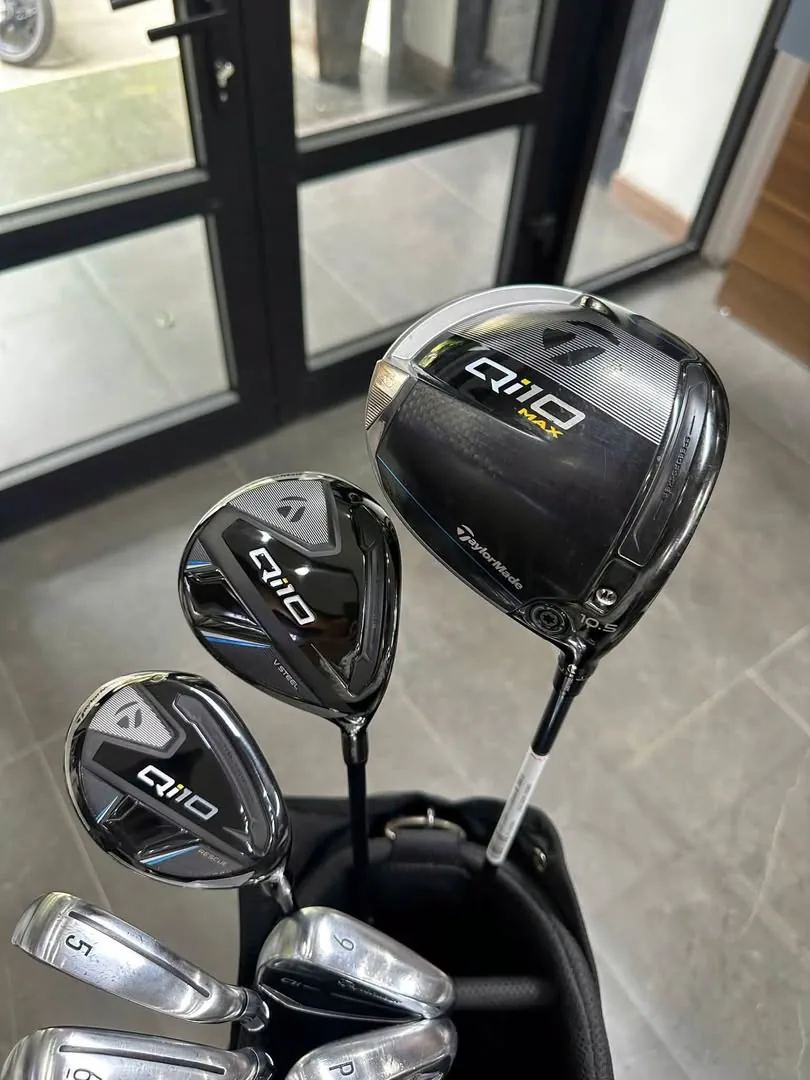
Beginners should go for a driver with 10.5–12 degrees of loft. More loft gets the ball airborne more easily and reduces sidespin, so your slice (the ball curving right for a right-hander) won't be as severe. Plenty of people buy a 9-degree driver because that's what good players use, then spend a whole range session unable to get the ball up.
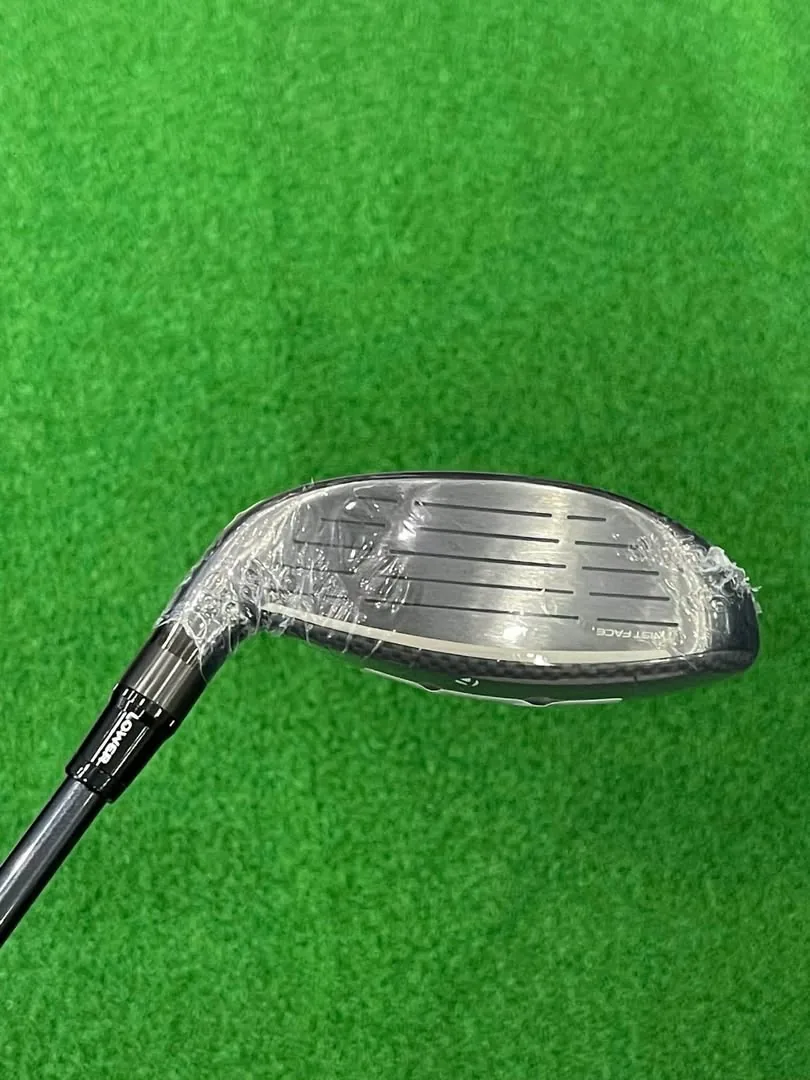
Fairway woods (3W, 5W, 7W)
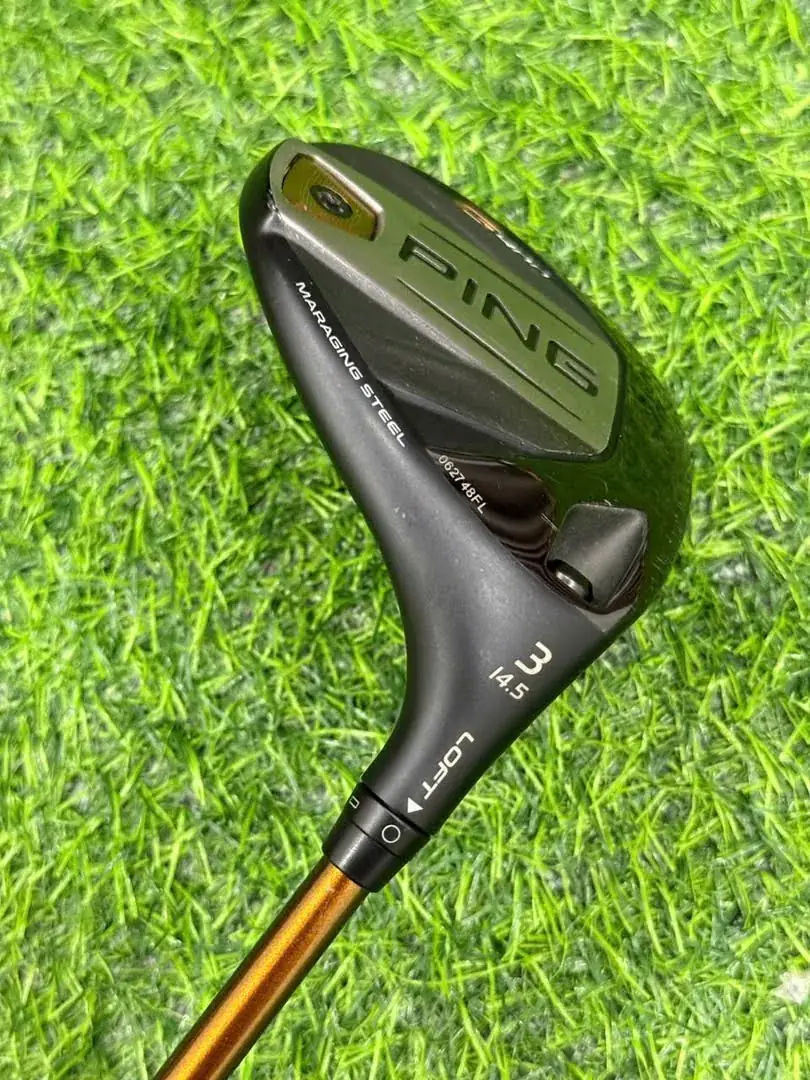
Fairway woods have smaller heads than a driver and work both off the tee and off the turf. A 3-wood has around 15 degrees of loft and is tough for beginners to hit off the grass. A 5-wood (18–19 degrees) or 7-wood (21 degrees) is far more forgiving. If you only get one, make it a 5-wood.
Hybrid (rescue): the beginner's best friend
A hybrid blends a wood and an iron: a chunkier head and a low centre of gravity make it easy to launch. A 4H or 5H can replace your 4 and 5 irons, clubs that even 20-handicappers dread. When the ball is sitting in light rough, a hybrid is almost always the safer choice over a long iron.
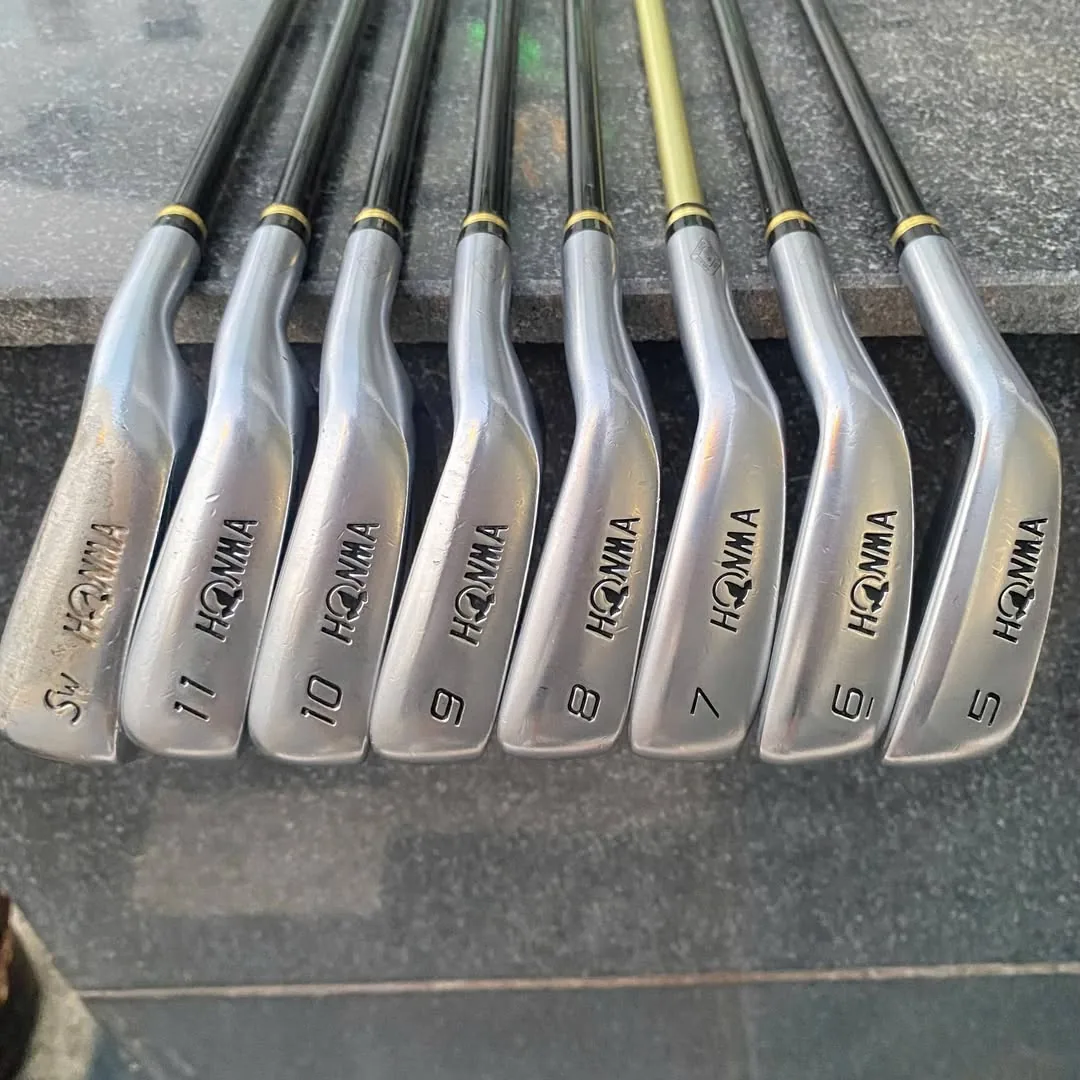
Irons 5–9
These are the clubs you'll hit most in practice. At the range, coaches usually hand beginners a 7 iron first, since it's a manageable length and shows up swing faults clearly. Go for cavity back irons (hollowed-out back, weight pushed to the perimeter) rather than blades (thin, solid back). Cavity backs are much more forgiving when you miss the centre of the face.
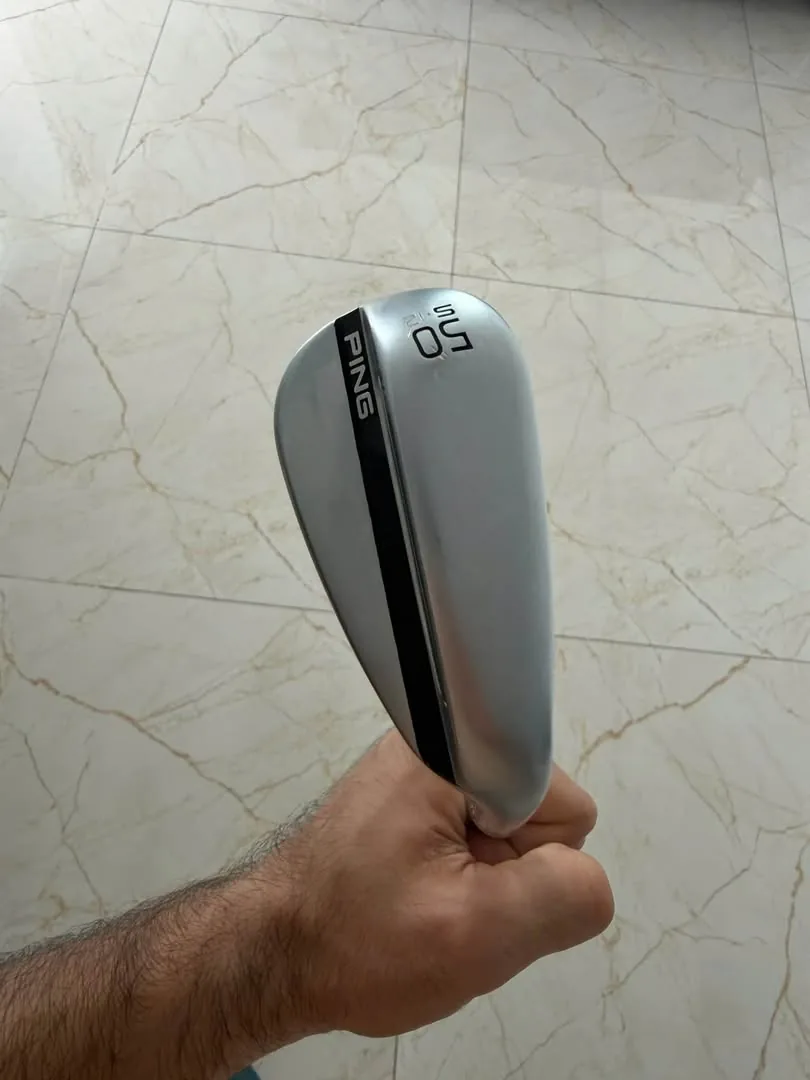
Wedges: PW, GW, SW, LW
Wedges are high-loft clubs for short shots around the green. The PW (pitching wedge, 43–47 degrees) usually comes with the iron set. The SW (sand wedge, 54–58 degrees) has a wide sole to get you out of bunkers. The GW (gap wedge, 50–52 degrees) fills the gap between PW and SW. The LW (lob wedge, 58–64 degrees) hits very high, soft shots. It's tricky to use, and beginners can do without it for now.
For how chips and pitches work out on the course, our guide on how to play golf for beginners walks through each shot.
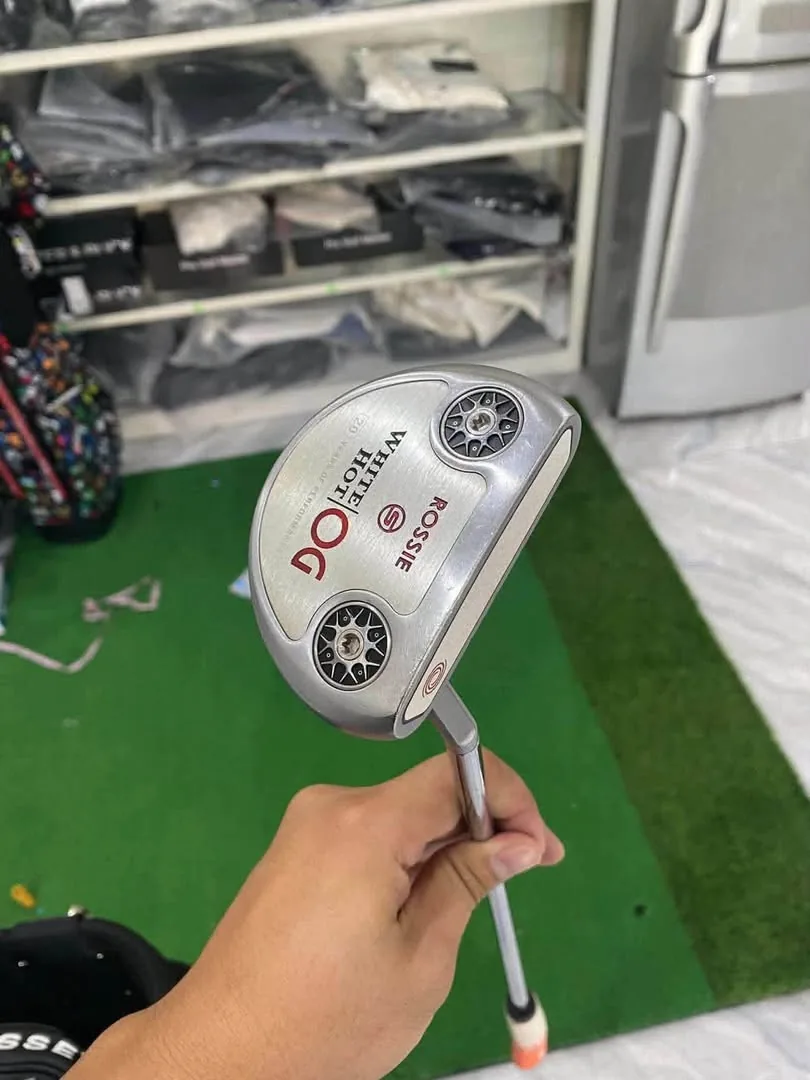
Putter: the club you'll use most in a round
A typical beginner takes 36–40 putts over 18 holes, more than any other single club gets used. Putters come in two main shapes: blade (small, narrow head) and mallet (larger head, half-moon or square). Mallets are more stable on short putts, so they're easier to get used to. Standard lengths are 33–35 inches. At address, your eyes should be directly over the ball or just inside it.
3. Loft and distance chart for beginners
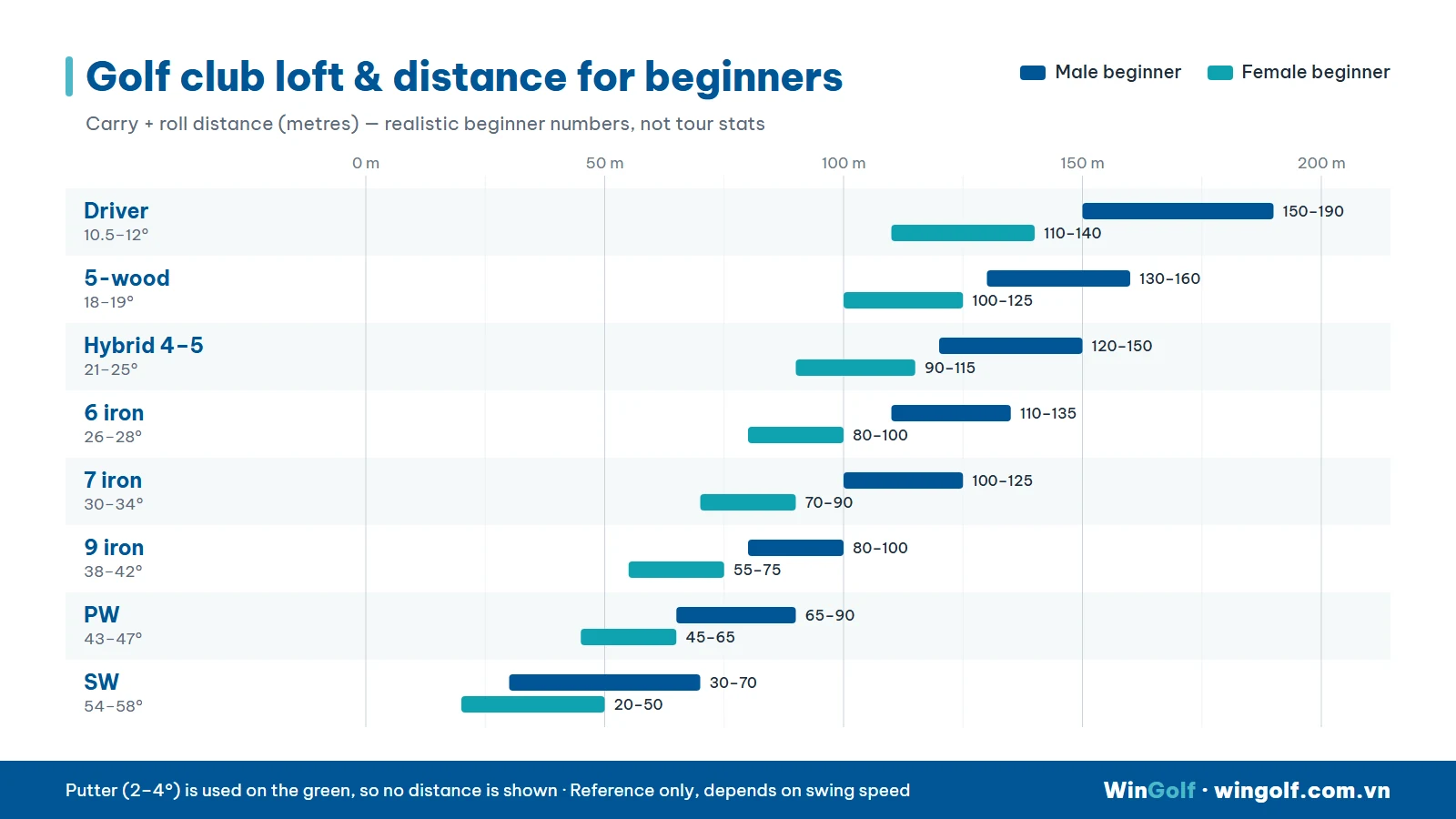
Lots of articles say a driver goes 200–300 yards. That's what good players hit. The chart below shows total distance (carry plus roll) that golfers 6–12 months into the game typically reach, so you know which club to pull for which distance without holding yourself to unrealistic numbers.
| Club | Typical loft | Male beginner (m) | Female beginner (m) |
|---|---|---|---|
| Driver | 10.5–12° | 150–190 m | 110–140 m |
| 5-wood (5W) | 18–19° | 130–160 m | 100–125 m |
| 4–5 hybrid | 21–25° | 120–150 m | 90–115 m |
| 6 iron | 26–28° | 110–135 m | 80–100 m |
| 7 iron | 30–34° | 100–125 m | 70–90 m |
| 9 iron | 38–42° | 80–100 m | 55–75 m |
| PW | 43–47° | 65–90 m | 45–65 m |
| SW | 54–58° | 30–70 m | 20–50 m |
| Putter | 2–4° | On the green | On the green |
A quick tip: after 3–4 range sessions, write down your average distance with each club, not your best shot. Pick clubs on the course by those averages and you'll come up short of the green far less often. (To convert, 100 m is roughly 110 yards.)
4. How many clubs does a beginner need? A 7–9 club setup
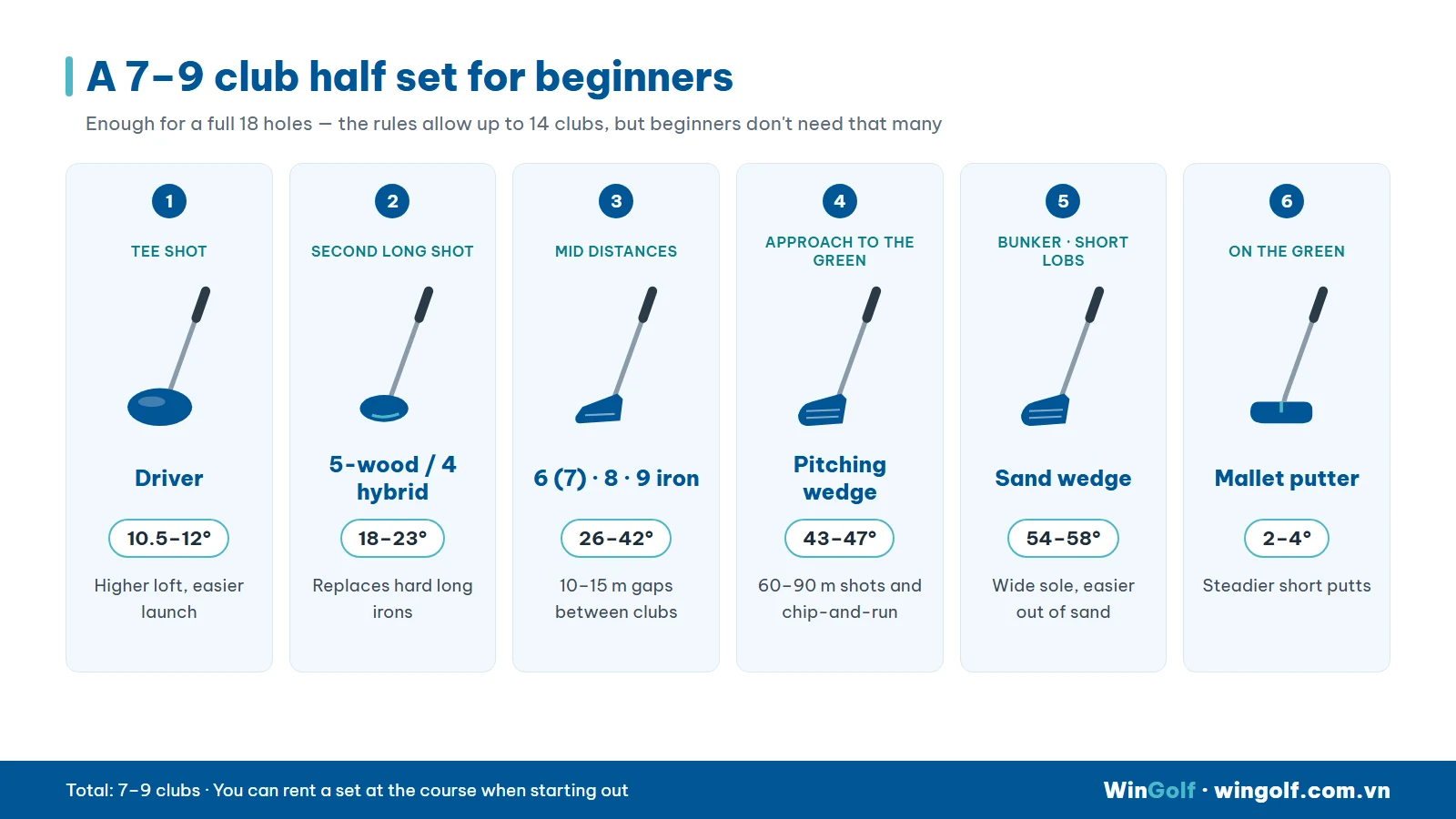
A half set is enough to play a full 18 holes at almost any course in Vietnam. Fewer clubs has its own upside: less dithering over club selection, and you get to know each one better. Here's a suggested setup:
| Role in the bag | Suggested club | Why |
|---|---|---|
| Off the tee | Driver 10.5–12° | High loft, easy to get the ball up |
| Long second shot | 5W or 4H hybrid | Replaces hard-to-hit long irons |
| Mid-range | 6 (or 7), 8 and 9 irons | Three distances spaced 10–15 m apart |
| Approaching the green | PW | 60–90 m shots and bump-and-run chips |
| Bunkers, short lofted shots | SW 56° | Wide sole, gets out of sand easily |
| On the green | Mallet putter | Stable on short putts |
Once you're playing regularly and notice a distance gap between two clubs (say between your PW and SW), that's the time to add a club that fills it. Don't buy a boxed set just to have the full count.
5. How to choose the right golf clubs: 5 specs to check
Shaft flex by swing speed
Flex is the most important spec and the one people get wrong most often. A shaft that's too stiff produces low shots that leak right. One that's too soft balloons the ball and makes direction hard to control. The proper way is to measure your driver clubhead speed on a launch monitor at the range. If you can't get measured yet, estimate from your driver distance:
| Flex | Driver clubhead speed | Driver total distance | Usually suits |
|---|---|---|---|
| L (Ladies) | Under 70 mph | Under 140 m | Most female beginners |
| A / Senior | 70–80 mph | 140–165 m | Older men, stronger women |
| R (Regular) | 80–95 mph | 165–200 m | Most male beginners |
| S (Stiff) | 95–105 mph | 200–230 m | Experienced men with a quick swing |
| X (Extra Stiff) | Over 105 mph | Over 230 m | Very strong players |
Club length by height
Standard men's clubs are built for players roughly 170–180 cm (5'7"–5'11") tall, so most men do fine with standard length. Height is only a first filter, though. Your wrist-to-floor measurement, standing upright, is what really decides it:
| Height | Adjustment from standard | 7 iron (men's) |
|---|---|---|
| Under 160 cm (5'3") | 1 inch shorter | About 36 inches |
| 160–170 cm (5'3"–5'7") | 0.5 inch shorter or standard | 36.5–37 inches |
| 170–183 cm (5'7"–6'0") | Standard | 37 inches |
| 183–190 cm (6'0"–6'3") | 0.5 inch longer | 37.5 inches |
| Over 190 cm (6'3") | 1 inch longer | 38 inches |
How to tell the length is wrong: when you sole the club in your normal address position, the toe points up (club too long) or the heel lifts off the ground (club too short). Standard women's clubs are usually about 1 inch shorter than men's.
Shaft material: steel or graphite
- Steel shafts: heavier, more solid feel, cheaper. Good for stronger men whose swing is already fairly consistent.
- Graphite shafts: lighter, help add clubhead speed and cut down vibration into the elbow. Good for women, seniors, beginners and anyone with sore joints.
- Drivers and fairway woods almost all use graphite. Irons vary; beginners with a gentler swing should lean towards graphite or lightweight steel.
Clubhead: prioritise forgiveness
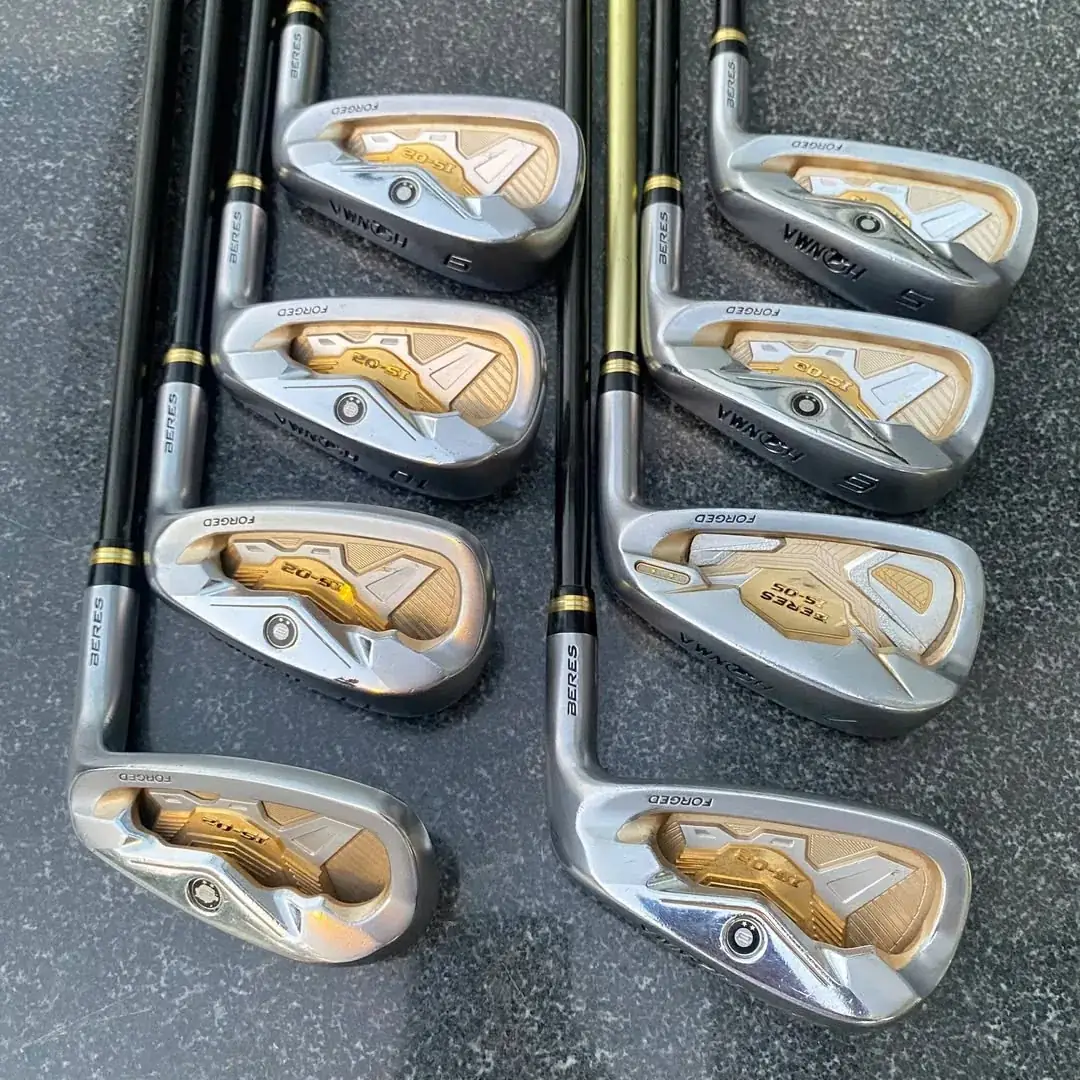
For irons, choose a cavity back with a large face and a wide sole (game improvement). For the driver, go for a 460cc head with a low, deep centre of gravity. Anything labelled “game improvement” or “super game improvement” in a brand's catalogue is built for beginners and high handicappers.
Grip size
Grips that are too thin let your wrists release early, and the ball tends to hook left. Grips that are too thick tend to push the ball right. If you wear an S–M glove, standard grips usually fit; L–XL glove wearers can try midsize. Regripping costs only a few dollars per club in Vietnam, far less than replacing clubs.
Is a club fitting worth it? Not yet. A full fitting costing $100 or more is overkill for a beginner. A single swing-speed session on a launch monitor at the range is enough to tell you which flex and driver loft suit you. A detailed fitting only pays off once your swing has settled down, usually after 6–12 months of regular practice.
6. Rent, buy used or buy new?
There's no single right answer, but there is a sensible path for most people. The prices below are typical figures from golf shops and courses in Vietnam as of October 2026, converted at roughly 25,000 VND to the US dollar, and they vary with brand and condition. For the bigger picture, see our guide to the cost of playing golf.
| Option | Typical cost | Best when | Watch out for |
|---|---|---|---|
| Borrow / rent at the driving range | Free to about $4 per session | First 1–3 months, not sure you'll stick with it | Shared clubs, flex won't suit everyone |
| Rental set at the golf course | About $20–50 per round | Occasional rounds, golf trips, business travel | Request it when booking so the course holds a set |
| New half set, entry-level | About $320–600 | You're committed to golf, moderate budget | Get the flex right; don't chase brand names |
| Used full set, genuine brand | About $640–1,600 | You want big-brand clubs at a softer price | Check for cracked shafts, worn faces, old grips |
| New full set, mid-range | About $800–1,200 | You play 2–4 times a month | At least test the driver and 7 iron first |
| New full set, premium | From about $2,800 | Consistent swing, professionally fitted | Won't make a beginner improve any faster |
The 3-stage path WinGolf recommends to new golfers
- Months 1–3: practise at the range with borrowed clubs, mostly the 7 iron, wedges and putter. You don't need to buy anything except a glove and shoes. Not sure where to practise? See our beginner's guide to choosing a driving range.
- Months 3–12: get your swing speed measured once, then buy a new half set or a used full set in the right flex. This is also the time to play your first real round.
- After 12 months: once you know which club lets you down most, upgrade that one (usually the driver or the irons) instead of replacing the whole set.
A 5-minute check for used clubs
- Look closely at the shaft just above the head and under the grip. Cracks, dents or deep rust mean walk away.
- If an iron face is worn shiny in the middle and the grooves are almost flat, the ball won't check up.
- Shake the head gently next to your ear. A rattle inside can mean the epoxy has come loose.
- Read the flex marking on the shaft (R, S, A, L). If the shaft has been replaced and the specs aren't clear, ask questions.
- Slick or hardened grips mean you should factor regripping into the price.
7. Choosing a golf bag
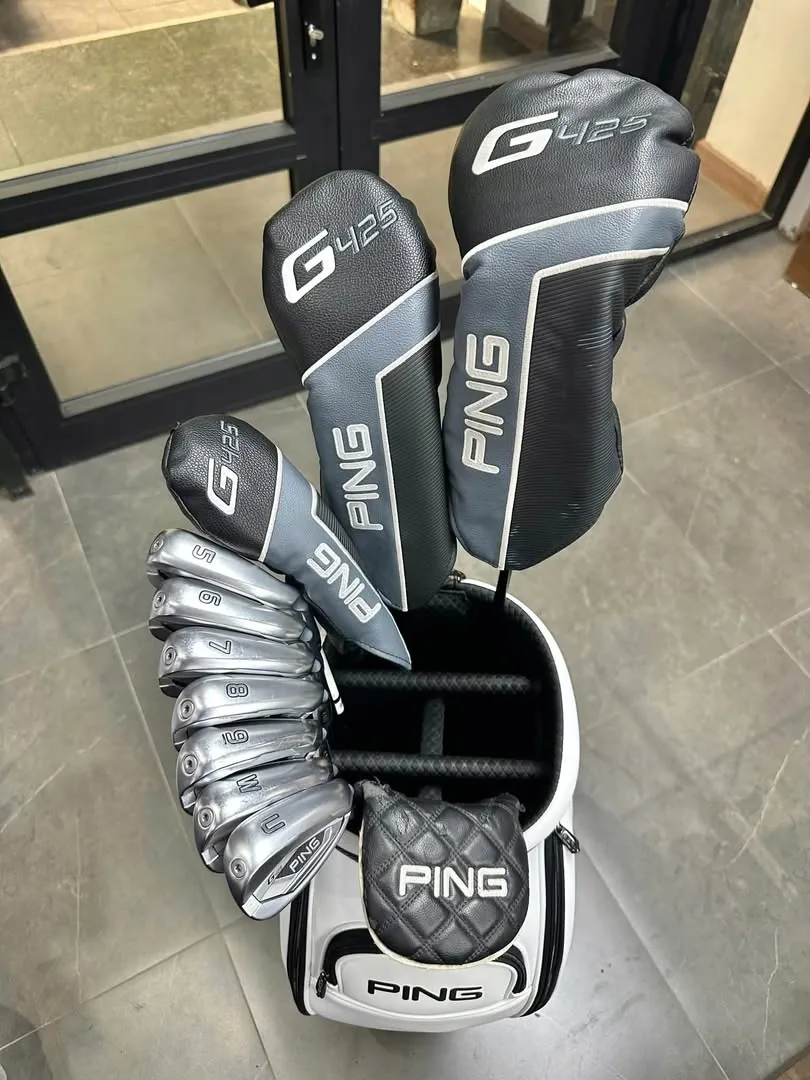
The bag tends to be the last thing people buy, but the wrong one can annoy you for years. There are three main types:
| Bag type | Features | Typical price | Best for |
|---|---|---|---|
| Stand bag | Light at 1.5–2.5 kg, fold-out legs, double shoulder straps | About $80–240 | Frequent range visits, carrying your own clubs, walking courses |
| Cart bag | Heavier, lots of pockets, solid base that straps onto a buggy | About $160–480 | Golfers who mostly ride in a buggy with a caddie |
| Travel cover | Goes over your golf bag for flights; hard-padded versions available | About $60–200 | Anyone who travels for golf, at home or abroad |
At most Vietnamese courses the caddie loads your bag onto the buggy for you, so a stand bag or a mid-size cart bag both work fine for beginners. Two features are worth paying for: at least 5–6 club dividers so your clubs don't clatter together, and an insulated pocket for drinks, because playing 18 holes at midday in the south or central regions makes dehydration a real risk.
Organising your bag: long clubs (driver, woods, hybrids) go in the top section near the strap, irons in the middle in number order, and wedges and putter in the section nearest you. You'll pull clubs faster and never have to dig around.
8. Common beginner mistakes when buying golf clubs
| Mistake | What happens | Do this instead |
|---|---|---|
| Buying a 14-club full set in week one | Wasted money, several clubs untouched all year | Practise with borrowed clubs for 1–3 months, then buy a half set |
| Choosing stiff flex because “men use stiff” | Low shots that go right, lost distance | Measure your swing speed; most male beginners suit R |
| A 9° driver like the good players | Ball won't get up, big slice | Pick 10.5–12°, ideally with an adjustable hosel |
| Buying blade irons because they look good | Off-centre hits lose 20–30% of their distance | Choose cavity back or game improvement irons |
| Buying used clubs online without checking | Cracked shafts, fakes, wrong specs | Inspect in person or buy from a shop that offers a warranty |
| Grabbing any old putter | The green is where you drop the most shots | Try at least 2–3 putter shapes on a putting mat |
9. Taking clubs to the course: the 14-club rule, rentals and practical tips
- Count your clubs before teeing off on the 1st. Fifteen in the bag is a breach, even if you never touch the extra one.
- During a round you can't borrow a club from anyone playing on the course, including your playing partners. Whatever you start with is what you finish with.
- If you're renting at the course, ask for clubs when you book so the course can prepare a set with the right hand (left or right) and flex. On busy weekends the good rental sets go fast.
- Put your name and phone number on your bag. After the round, count your clubs and headcovers with your caddie before you leave.
- Bring 10–12 balls for your first few rounds. For help choosing them, read our guide to golf balls for beginners.
If you're in Hanoi and want to play your first round with rental clubs, a flat course close to the city centre such as Long Bien Golf Course is a comfortable choice. You'll find more options and typical green fees on our golf courses in Vietnam page. In Ho Chi Minh City, you can start at one of the driving ranges in Ho Chi Minh City that lend clubs before heading out to a real course.
10. Looking after your golf clubs
- Wipe the clubface and grooves after every session. Dirt and sand stuck in the grooves reduce spin.
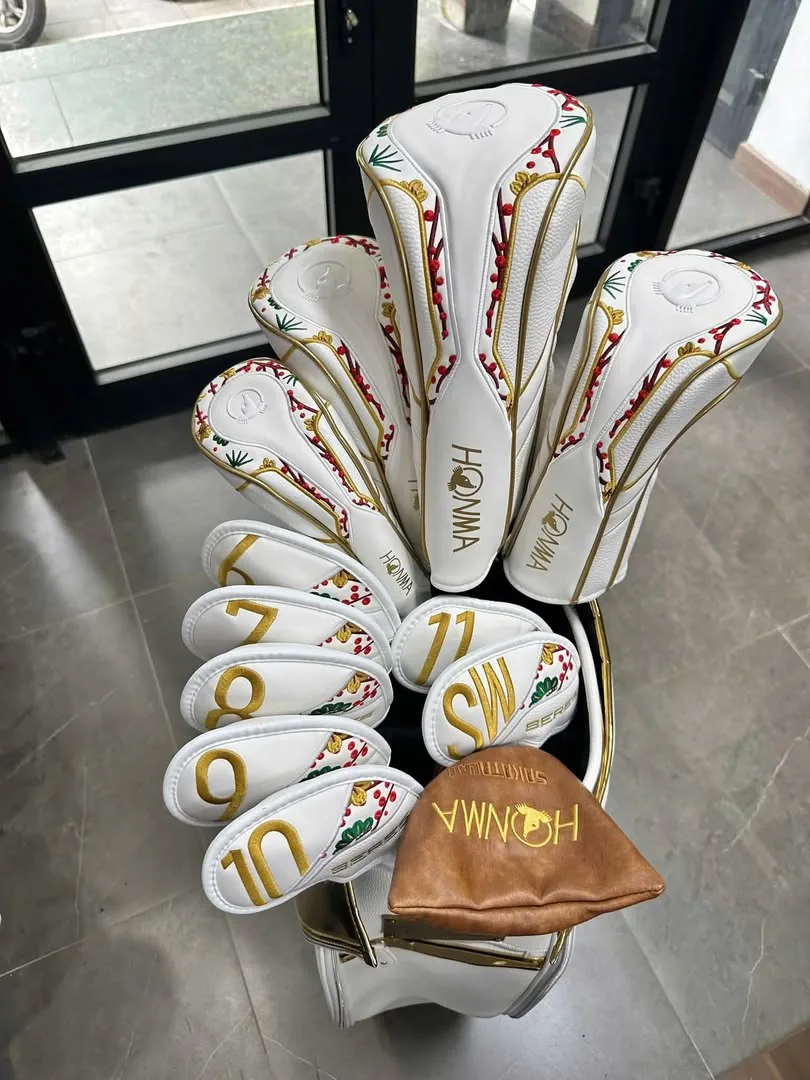
- Keep headcovers on your driver, woods, hybrids and putter whenever you're moving the bag.
- Don't leave your bag in a hot car boot for days. Heat breaks down the head epoxy and grips quickly.
- After playing in the rain, take the clubs out of the bag, dry them off and let them air out overnight.
- Replace grips once they feel slick or hard. Regular players usually regrip after about a year or 40–60 rounds.
11. Golf club FAQs
How many clubs are in a golf set?
The Rules of Golf allow up to 14 clubs. An off-the-shelf full set usually has 11–14: a driver, 1–2 fairway woods, 1–2 hybrids, 5–6 irons, 2–4 wedges and a putter. A beginner only needs 7–9.
What golf clubs should a beginner buy first?
If you're buying just one club to practise with, get a 7 iron. If you're buying to play on a course, go for a half set: a high-loft driver, a 5-wood or hybrid, 6/7–9 irons, PW, SW and a putter.
What is a driver and how much does one cost?
The driver is the 1-wood: the biggest head and longest shaft in the bag, used for long tee shots. In Vietnam, a new entry-level driver starts from about $200, while the latest models from major brands usually run from about $400–600 upwards. A used driver that's 2–3 years old costs considerably less.
What's the best golf club brand for beginners?
Major brands such as Callaway, TaylorMade, Ping, Titleist, Cobra, Honma and Mizuno all make easy-to-hit lines for beginners. At this stage, getting the flex, loft and head style right matters far more than the logo.
How should women choose golf clubs?
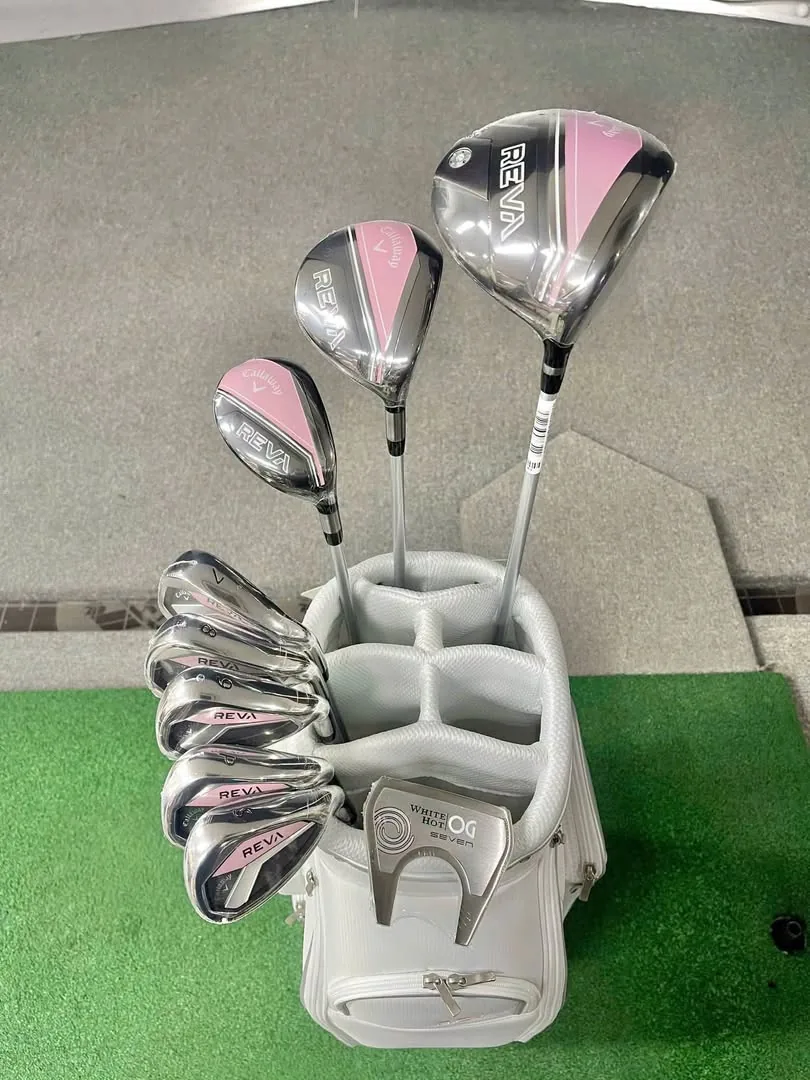
Most female beginners suit a women's set with L flex graphite shafts, about 1 inch shorter than men's clubs, a driver with 12 degrees of loft or more, and hybrids in place of long irons. Women taller than 170 cm (5'7") or with a faster swing can try A flex.
Is it worth buying used golf clubs?
Yes, as long as you inspect them carefully or buy from a reputable shop with a warranty. Genuine clubs that are 2–4 years old still perform very well at roughly half the price of new. Avoid clubs of unknown origin and reshafted clubs with no listed specs.
Do I need to bring my own clubs to play golf in Vietnam?
No. Most golf courses in Vietnam rent out sets by the round. Just ask when you book so the course can hold a suitable set for you.
Playing your first round soon? WinGolf books your tee time, reserves rental clubs in the right hand and flex, and arranges a caddie used to working with beginners at courses in Hanoi, Ho Chi Minh City and across Vietnam.
Hotline / WhatsApp / Zalo: +84 985 092 088 · Email: booking@wingolf.com.vn
More from our golf knowledge section: how to play golf for beginners · choosing golf balls · what is a golf handicap · what par means in golf · the cost of playing golf.